Writing Short Stories
CREATIVE WRITING COURSE
Developing your voice as a short story writer is the key to crafting fiction that draws readers in and leaves a lasting impression.
This eight-week online course is designed for people who want to explore the process of writing compelling short fiction, exploring character, structure, voice, and the techniques that bring fictional worlds to life. Each of our sessions runs live on Zoom and weekly tasks are assigned to each student, with personalised lecturer feedback ensuring individual growth.
This course costs £160 and one time slot is currently available:

What We'll Cover
WRITING SHORT STORIES COURSE OVERVIEW
Across eight sessions, here's what you'll learn, explore and leave with:
The Shape of Short Stories
Every great story has a skeleton.
In this session, we look at the building blocks of short fiction and how they work together to create something that pulls a reader through to the last line. We'll cover exposition, conflict, climax, resolution, and denouement - not as a rigid formula, but as a flexible framework you can bend to your own storytelling instincts.
It's Character Building
If nobody cares about your characters, it doesn't matter how exciting the action is. Readers engage with people, not plots. In this session, we'll look at how to create characters who feel genuinely alive - whether you're drawing from people you know, building hybrids, or starting from scratch. We'll explore how to reveal character through action, dialogue, and detail, so your cast carries the story without you having to explain them.
Seeking an Audience
Every story needs the right voice for the right reader.
In this session, we'll think about who you're writing for and what that means for the choices you make on the page. Voice, tone, register, narrative perspective... these aren't just stylistic flourishes, they're the things that make a story feel like it belongs to someone. We'll look at how to find yours, and how to use it with intention.
A Sense of Place
A setting is more than a backdrop, it's the world your reader sinks int.
In this session, we'll look at how to build settings that do real work in your story. Using your mind's eye, sensory memory, and carefully chosen detail, you'll learn how to create locations that feel atmospheric and lived in, places your reader can inhabit and explore.
Speaking of Dialogue
Real people don't talk in full sentences, and neither should your characters.
Good dialogue is one of the hardest things to get right, and one of the most satisfying when it clicks. In this session, we'll look at how to write conversation that sounds natural, reveals character, and moves the story forwards, understanding how the rhythm and texture of the way people speak can become one of your most important tools as a writer.
Time to Commit
It's time to collate your notes and bring things together, to write that first draft.
It doesn't have to be pretty and beautifully polished, getting it down on paper is the most important thing. In this session, we'll workshop your ideas and see if there are plot holes to fill or if there's research to be done. By the end of the session, you'll have a roadmap to follow to begin pulling the pieces of your first draft together.
Leave a Message
The best stories say something, even if you don't plan it that way.
Sometimes it's easiest to reverse-engineer your story to see if you recognise a theme after the writing is done. You never want to be heavy-handed with this as it can put readers off, but once you've written your first draft, you'll come to realise you're exploring themes such as loss, friendship, new beginnings and more. How could you enhance this? Could you add more layers with delicate foreshadowing?
Redrafting and Proofreading
This final stage might not seem all that exciting, but it's vital and important.
Redrafting is where the really hard work begins. In this session, we'll look at what happens when you return to your draft with fresh eyes - tightening the language, improving the pace, and making sure your story reads as well as well on the page as it does in your head. If getting your work out into the world is part of your goal, we'll talk about what publishers and literary magazines are looking for.
The Final Project
From the very first session, you'll begin working on a short story that you'll submit ahead of your 1:1 session with your tutor, as well as a small portfolio of micro-fiction.
1:1 Session
At the end of this creative writing course, you'll be offered a 1:1 session to talk through anything you're hoping to achieve, anything you're finding challenging, or any next steps you want to take, as well as your final project.
Who's Who?
HELLO!
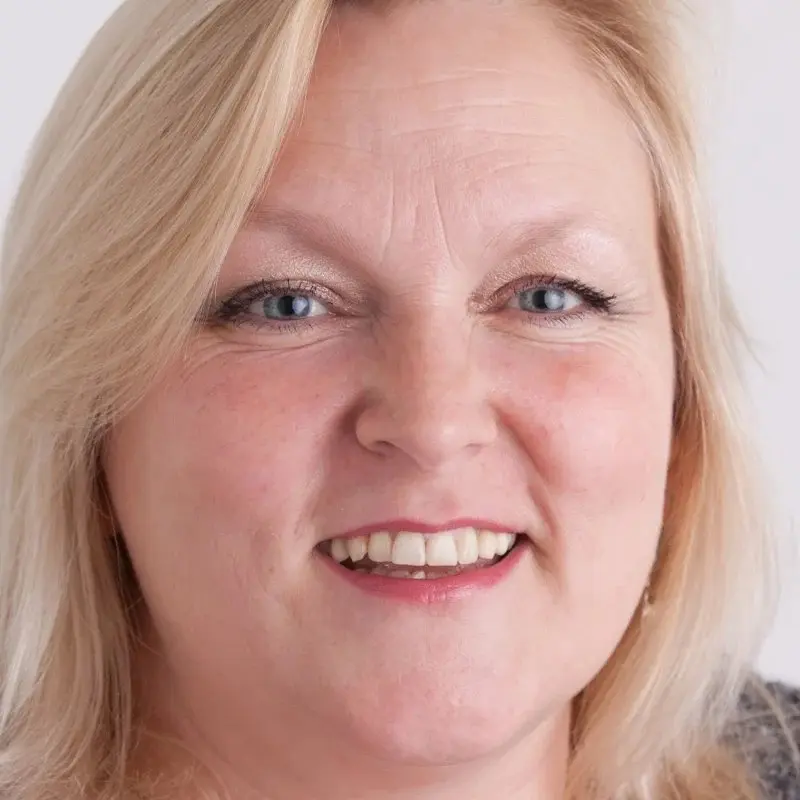
- Lynn is a published author and creative writing lecturer at Falmouth University. She brings the same expertise she brings to the classroom to every workshop and course.
Your Tutor:
LynnAuthor &
Creative Writing Lecturer at Falmouth University
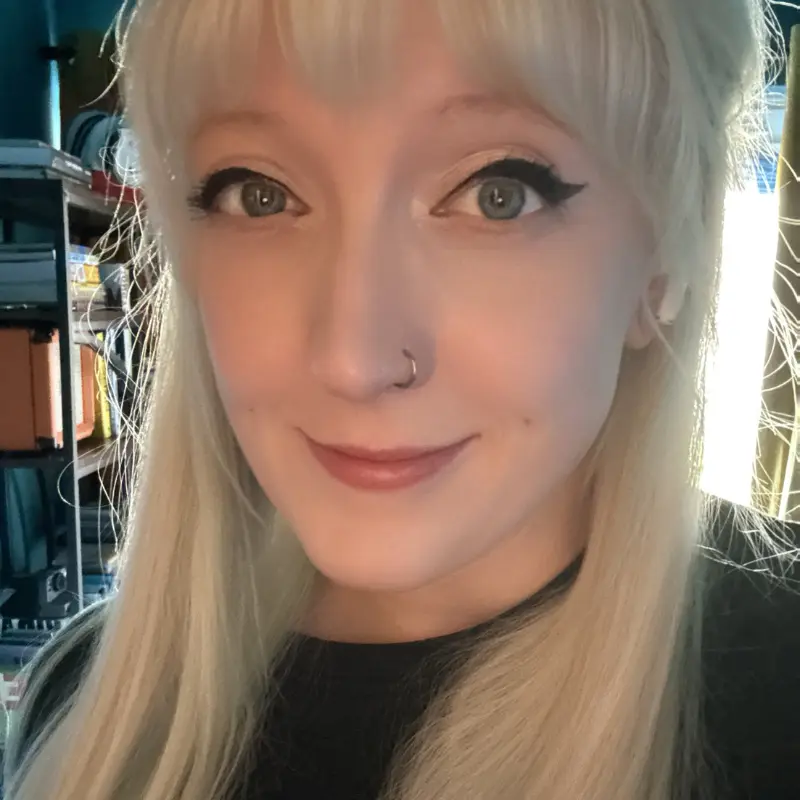
- Kimberley is a Chief Marketing Officer with over a decade of hands-on experience helping businesses grow. At Rewild EDU, she aims to make support as accessible as possible.
Your Support:
KimberleyChief Marketing Officer
Working with Us
Here's what you can expect when working with us on a creative writing course:
THE PROCESS
Online Materials
Before each live session, you'll receive a set of online materials to work through in your own time, including readings and activities.
Live Sessions
Every weekly session is delivered live, in person or online, so you can ask questions, get instant feedback, and work through ideas.
Personalised Feedback
Throughout the course, you'll receive feedback that's specific to the short story and micro-fiction you're working on. We look at where you're succeeding, and where you can grow.
Practicing Professionals
Our tutors are all working professionals who bring real-world experience into every session. Lynn is a published author and creative writing lecturer.
Learn More
Frequently Asked Questions
Is this course suitable for students of all abilities?
Yes, this course is suitable for students of all abilities.
We’ve designed this course to be as accessible as possible. Every session builds gradually, so there’s always something to stretch you regardless of your starting point, and your tutor will always be around to offer support.
If you have any additional needs, please contact us to discuss how we can best support them.
Will I receive individual feedback?
Yes, all of our students receive individual feedback.
We believe that no two learning journeys are identical, which is part of why individual feedback is paramount if we want to support your growth.
Do I need access to specific software?
No, there are no specific software requirements for Writing Short Stories.
We do host the online iteration of this course through Zoom, but you won’t be required to have an account to join. Every week, you’ll be sent an invite for your webinar the day prior, and all of your materials for the week will be sent at the start of the week.
Writing Short Stories is led by Lynn, a published author and creative writing lecturer at Falmouth University.
Yes.
We ensure all of our sessions are live so that we can get to know each student and we always look at their work indiviually. Feedback is always specific to what they’re working on, not generic, and it’s framed in a supportive way around what’s working and what to develop next.
Can I join online or in person?
We hold these sessions both online and in person, but while our office in Newcastle is being fitted we’re utilising community spaces across Newcastle and Leeds.
The current availability is for our online courses.
Do I have to turn my camera on and speak?
While we love seeing and hearing our students, we understand that not everyone is comfortable with turning their camera on and speaking. We offer a low pressure environment in which students can do what’s best for them.
We hold these sessions both online and in person, but while our office in Newcastle is being fitted we’re utilising community spaces across Newcastle and Leeds.
The current availability is for our online courses.
Similar Courses
YOU MIGHT ALSO ENJOY
- Develop your voice as a creative non-fiction writer and craft stories that capture real-life experiences with truth at their core.Creative Non-Fiction
Writing Creative Non-Fiction
- Are you a writer looking for some help building an audience to sustain your practice? We've got a toolkit for you.Marketing for Writers
Marketing for Writers
- In this entry-level course, learn to write copy that connects, converts and drives action.Copywriting for Beginners
Copywriting for Beginners